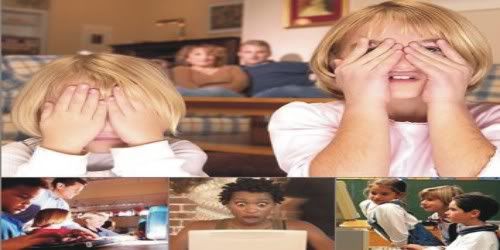
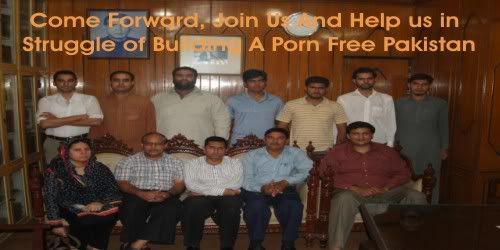
This Group aims to promote solidarity amongst the Pakistani's on the issue of Easy Access to Pornography in Pakistan, as the name itself suggests.

Let there arise out of you a band of people inviting to all that is good, enjoining what is right, and forbidding what is wrong: They are the ones to attain felicity.

Tuesday, 14 October 2014

گندے میسج کس طرح صحت کو تباہ کرتے ہیں

 سمارٹ فون، لیپ ٹاپ اور دیگر آن لائن آلات آج کے دوران میں بہت ہی سہولت سمجھی جاتی ہیں اور ہر دوسرے شخص کے پاس یہ تمام آلات موجود ہوتے ہیں لیکن جیسا کہ کہا جاتا ہے کہ ہر شے کے فوائد اور نقصانات ہوتے ہیں۔ اگر ان آلات کا استعمال رابطے میں رہنے کے لئے کیاجائ

برطانوی یونیورسٹی نے حال ہی میں اس پر تحقیق کی ہے اور اس کے نتائج نے مغربی معاشرے کو جھنجھوڑ کررکھ دیا ہے۔ تحقیق کے مطابق نوجوان لڑکے اور لڑکیاں غیر اخلاقی میسج اور تصاویر شیئر کرتے ہیں تو ان کی دماغی صحت پر انتہائی خطرناک اثرات ہوتے ہیں۔ وہ اپنے خاندانوں اور دوستوں سے دور ہوتے جاتے ہیں اور ان کی شخصیت میں منفی خیالات حد سے زیادہ ہوجاتے ہیں جبکہ معاشرے میں ایک ایسا اخلاقی بگاڑ آتا ہے جو کہ مستقبل قریب میں تمام انسانوں کے لئے انتہائی خطرناک ثابت ہوں گے۔ مزید برآں جو نوجوان لڑکے اور لڑکیاں یہ تصاویر ایک دوسرے سے شیئر کرتے ہیں تو اکثر یہ احتمال ہوتا ہے کہ یہ تصاویر اکثر سماج دشمن گروہ مذموم مقصد کے لئے استعمال کرتے ہیں۔ تحقیق میں بتایا گیا ہے کہ گندے میسج کی وجہ سے نوجوان خود لذتی کا شکار ہوتے جاتے ہیں اور نتیجے کے طور پر ان کی جنسی زندگی تباہ ہونا شروع ہوجاتی ہے۔ جبکہ ذہنی طور پر یہ لوگ معاشرے میں ناصرف تنہائی کا شکار ہوجاتے ہیں بلکہ وہ ایک مثبت کردار ادا کرنے میں بھی ناکام ہوجاتے ہیں۔ تحقیق کاروں کا کہنا ہے کہ اگر موجودہ نسل کو اس طرح کی مکروہ حرکات سے نہ روکا گیا تو آنے والے دور میں معاشرہ مکمل تباہی کا شکار ہوسکتا ہے۔

ے تو یہ ایک اچھی بات ہے لیکن اگر ان آلات کو شیطانی خواہشات کی تکمیل اور جنسی لذت کے حصول میں ضائع کیا جائے تو ناصرف مالی طور پر نقصانات ہوتے ہیں بلکہ اس کے صحت پر انتہائی خطرناک اثرات بھی ہوتے ہیں۔

Thursday, 11 September 2014

خود لذتی کی مکروہ عادت سے چھٹکارا پانے کےلئے مفید مشورے

خود لذتی کی عادت نو عمر لڑ کوں میں عام پائی جاتی ہے۔اگرچہ اس کے منفی اثرات کے بارے میں ماہرین میں اختلاف پایا جاتاہے ۔لیکن ایک بات وضح ہے اس عادت کا حد سے زیادہ رسیا ہو جانے والے نوجوانوں کو جسمانی اور ذہنی مسائل کاسامنا کرنا پڑتاہے ۔اگر آپ بھی یہ سمجھتے ہیں کہ یہ عادت آپ کی روز مرہ زندگی میں مسائل پیدا کر رہی ہے تو اس پر قابو پانے کے لیے کچھ مفید مشورے پیش خدمت ہیں ۔
سب سے پہلے تو ندامت اور احساس جرم کو ختم کریں کیو نکہ ہر ایک کی شخصیت میں منفی اور مثبت باتیں پائی جاتی ہیں اور اگر آپ کسی عادت میں نقصان دہ حد تک مبتلا ہو چکے ہیں تو یہ کوئی جرم نہیں ۔ اس کی اصلاح کے لیے کمر بستہ ہو جائیں۔ایسے حالا ت کا تدراک کریں جو آپ کو خود لذتی پر مائل کرتے ہیں مثلاً رات کو دیر تک جاگنا ،فحش فلمیں دیکھنا ،تنہائی میں رہنا اور جنسی خیالات میں کھوئے رہنا وغیرہ ۔فراغت اور تنہائی میں آپ کو خود لذتی پر مائل کرتی ہے لہذا زیادہ سے زیادہ وقت گھروالوں اور اچھے دوستوں کے ساتھ گزاریں  صحت مند سرگرمیوں کا آغاز کریں جیسا کہ کھیل کود ، فلاحی بہبود کے کام اور لکھے پڑھنے جیسے شوق اپنائیں ۔ اپنی خوراک میں پھلوں اور سبزیوں کا اضافہ کریں تاکہ آپکے جسم و ذہن کو توانائی ملے اور آپ اپنے کمر ے کو چھوڑ کر بیرون خانہ سرگرمیوں میں متمرک ہو جائیں،  صبر سے کام لیں ۔اگر آپ سمجھتے ہیں کہ آپ اس عادت سے چھٹکارہ پانے میں کامیاب نہیں ہو رہے تو ہمت نہ ہاریں اور پیہم کوشش جاری رکھیں کیو نکہ یہ عادت تبدیل ہو نے میں وقت لگ سکتا ہے ۔ کسی قابل بھروسہ بڑے یا بزرگ سے مدد لیں اور رہنمائی کے لیے مشورہ کریں ۔اخلاقی اصلاح کرنے والے بزر گ مدد گار ثابت ہو سکتے ہیں  اپنے ذہن میں بات بٹھا لیں کہ یہ کوشش آپ کو جسمانی اور ذہنی طور پر مضبوط کر ے گی اور اس کے مفید نتائج بر آمد ہونگے ، یہ بات آپکو یکسوئی کے ساتھ محنت جاری رکھنے میں مدد دے گی۔

Wednesday, 20 November 2013

Google, Microsoft Tighten Online Searches To Combat Child Porn

Google and Microsoft unveiled measures to block online searches for child sex abuse images on Monday as part of a bid by British authorities to crackdown on Internet pedophiles.
 The companies said as many as 100,000 search terms will now fail to produce results and trigger warnings that child abuse imagery is illegal while offering advice on where to get help.

The world's two largest search engine operators' move was a rare display of unity ahead of an Internet safety summit on Monday hosted by Prime Minister David Cameron.
Cameron welcomed the progress to block illegal content but said far more still needed to be done.
"If more isn't done to stop illegal child abuse content being found, we will do what is necessary to protect our children," he tweeted ahead of the summit that will announce a new trans-Atlantic task force to tackle online child abuse. The summit comes after Cameron this summer called on Internet firms to do more to stop access to illegal images. Now both companies have introduced new algorithms that will prevent searches for child abuse imagery.
Google executive chairman Eric Schmidt wrote in Britain's Daily Mail newspaper that these changes had cleaned up the results for over 100,000 queries that might be related to the sexual abuse of children.
"As important, we will soon roll out these changes in more than 150 languages, so the impact will be truly global," he wrote, adding the restrictions would be launched in Britain first then expanded to other languages in the next six months.
Both Google and Microsoft, who were due to join other Internet companies at the summit on Monday, have also agreed to use their technological expertise to help in the identification of abuse images.
Schmidt said Google planned to provide engineers to give technical support to the Internet Watch Foundation in Britain and the U.S. National Center for Missing and Exploited Children, and to fund internships for engineers at these organizations.
Conservative parliamentarian Claire Perry, who is Cameron's adviser on childhood, said British and U.S. law enforcement agencies would back up this effort by tracking pedophiles using the "hidden Internet" or so-called "dark web" of encrypted networks to distribute images of child abuse.
(Reporting by Belinda Goldsmith, editing by William Hardy)

Monday, 22 October 2012

Swiss Lawmakers Reject Burqa Ban

Swiss lawmakers have voted against a ban on the Muslim women burqa (face veil), putting an end to plans made by far right parties several years ago. “Today in Switzerland, wearing this type of clothing for religious reasons doesn’t pose any problems in daily life and is a rare practice in the Swiss Muslim community,” centre-right Radical Party parliamentarian Hugues Hiltpold said. Following a March Senate vote with the same result, the lower house of the Swiss parliament rejected the motion pushed by the canton of Aargau in a vote of 93 to 87.

The burqa ban proposal was first made by far-right Swiss People’s Party (SVP) under the title “Masks Off”.
It proposed a ban on wearing of face-veils, which is also called Niqab, on public transport. The bill also allowed authorities to “ban or restrict access to public buildings to such individuals in order to guarantee the security of other users.” Far right lawmakers had argued that the ban was necessary for public safety. But opponents said the proposal was excessive because so few women wear burqas in Switzerland.
The wearing of face-veil has been the focus of growing debate in the West in recent years.While hijab is an obligatory code of dress for Muslim women, the majority of Muslim scholars agree that a woman is not obliged to wear the face veil. Scholars believe it is up to women to decide whether to take on the veil or burka, a loose outfit covering the whole body from head to toe and wore by some Muslim women.
Hurting Muslims
Speaking for the majority, Hiltpold said banning the burqa would be excessive and would encourage tourists from Muslim countries to have negative opinions of the country. Affecting the country’s image abroad, he added that a ban on Muslim face veil would have bad effect on the countries Muslim minority. “Banning the niqab or the burka in Switzerland would have adverse consequences for Swiss Muslims.”
The proposed ban on burqa is not the first move by far right politicians against the country’s Muslim minority.
In 2009, the SVP has championed a ban on the building of mosque minarets in the European country.
According to the CIA Factbook, Switzerland is home to some 400,000 Muslims, representing 5 percent of the country’s nearly eight million people.

Wednesday, 26 September 2012

Blocking Immoral Websites would Fail to Protect Children and only give Parents False Sense of Security

What we disagree with is the mechanisms by which we protect our children. It's not that easy and the solutions that are being discussed are not perfect. Pakistan Telecommunication Authority (PTA) blocked thousand of Adult contents earlier, but in spite of blockage children are not safe. Because there are other things and contents circumnavigating round the Internet that hurts Children. Regulation of content on mobile phones and video iPods is largely absent.
Texting, tweeting, facebooking, web-surfing, emailing and social networking are the toys of the so-called ING (Internet Next Generation). Like their parents, this generation must contend with playground bullies. Often, a child will not even know the name of their tormentor. The victim's parents may feel helpless because they have no recourse or tools to protect their child online. The problem is the most frequent threat a child faces online. All episodes of bullying are serious. Dismissing them as inconsequential could have grim consequences that include depression, dropping grades, school truancy and health problems.
Parents themselves ultimately must take up the responsibility of instilling the right framework in their child and they have the power and right to ban and control their children from accessing adult content. I think the government haven’t an appropriate system to filter the adult content on Internet and cannot develop the right mindset in one child's mind. It is parents themselves who wield the ultimate control and power over their child. Thus, the responsibility also lies on parents to control and monitor their children.
Educating your kids
But, as always, common sense prevails: Tell your kids that the same rules they use when walking down a street apply when they surf the Net. Some good guidelines are following below:
· Set guidelines for how your child uses the computer and discuss those guidelines with your child.
· Don’t let your child give out personal information, such as address, phone number, or school name, online.
· Don’t let your child arrange for online meetings with a stranger or send his or her photograph.
· Tell your children to come to you immediately if someone sends them messages that they don’t like.
Controlling kids’ access
No matter how safe you make your home computer, your child may have access to other computers that don’t have such filters. While elementary schools may install these features, public libraries usually don’t because the filters would block adults from accessing legitimate information. And, of course, your child’s friends’ computers may not have the same safeguards as the one in your home does. So be sure to include other computers your children may use when setting the rules for them. And it would be a good idea to talk to the parents of the children your child visits often and ask if they use filters on their computer. These parents may not use any filters just because they don’t know they exist.
Porn sites are all over the Internet and, unfortunately, kids are certainly smarter than adults are about computers. The good news is that online services provide tools for parental control that protects curious young minds from getting inappropriate materials. With varying degrees, they let you surf for what you want without worrying too much about whether your kids can also find the material. You can, in fact, allow your children to use the computer and still protect them from evil and other inappropriate online content. Dozens of software filters are now available, and http://www1.k9webprotection.com/ can lead you to the one that has the features you want. It’s totally free, safe and tested by me. (If you need any assistance regarding installation of “K9 Web Protection” then don’t hesitate to ask me)

Friday, 7 September 2012

In Pakistan, underground parties push the boundaries


This is not Saturday night at a club in New York, London or Paris. It is the secret side of Pakistan, a Muslim nation often described in the West as a land of bearded, Islamic hardmen and repressed, veiled women.
People dance to the beat of the house music at Centrifuge, a
Pakistani underground rave party at a farmhouse on the
outskirts of Pakistan's Capital, Islamabad early July 15, 2012.
Credit: REUTERS


Pakistan was created out of Muslim-majority areas in colonial India 65 years ago, and for decades portrayed itself as a progressive Islamic nation. Starting in the 1980s, however, it has been drifting towards a more conservative interpretation of Islam that has reshaped the political landscape, fuelled militancy and cowed champions of tolerance into silence.
But the country remains home to a large wealthy and Westernised elite that, in private, lives very differently.
Every weekend, fashion designers, photographers, medical students and businessmen gather at dozens of parties in Islamabad, Karachi and Lahore to push social boundaries in discreet surroundings that would horrify, and enrage, advocates of the stricter brand of Islam.
"This is just epic," said Numair Shahzada, bobbing his head to the beat at a party in a farmhouse outside Islamabad as fitness instructors moonlighting as bouncers looked on. "The light and smoke show is phenomenal."
Young men and women mix freely, dancing, talking or drinking. Some curl up together in quiet areas.
Although alcohol is prohibited in the country, many have brought their own liquor. Whisky is carried in paper bags and vodka is disguised in water bottles arranged along the dance floor.
The party-goers form only a tiny minority of the country's 180 million people, but overall, Pakistan is not repressive. Women can drive, are enrolled in universities and have played prominent roles in politics. Unmarried men and women can interact without risking the wrath of religious police.
People from its most populous province, Punjab, are renowned for their exuberance.
But a conservative form of Islam is chipping away at the tolerance.
A few hours' drive from Islamabad's party circuit, parts of remote tribal regions have fallen under the sway of hardline Taliban militants, who dream of toppling the U.S.-backed government and creating a society where revellers would face flogging, or worse.
"Men and women who dance together are damned by God. Whenever we see such displays of vulgarity we will definitely make them a target," said a senior Taliban commander.
News reports have said a tribal council in a village near the Afghanistan border ordered four women killed earlier this year for clapping and singing as men danced at a wedding. The Supreme Court has ordered an investigation, but there have been no further details.
CREEPING CONSERVATISM
While the vast majority of Pakistanis abhor the Taliban's violence, there are many who share their belief that Islam should be Pakistan's guiding force. Religious parties, which do poorly at the polls but exert considerable sway over public debate, believe Islam should govern all spheres of life.
"It's so messed up," said Myra, a 23-year-old Pakistani who has dyed her hair reddish-brown.
"You see the servants and the drivers at the parties watching you and you wonder what kind of a person they think you are."
To avoid prying eyes, the kind of alcohol-fuelled blow-outs enjoyed by Myra and her friends are held in lonely farm-houses in the outskirts of Islamabad and other cities, or in affluent neighbourhoods behind high walls. Organisers charge on average a $60 entry fee, an amount most Pakistanis earn in a month.
Rafia, petite with long, black hair and wearing tight jeans and a low-cut black blouse, is a regular on the party scene.
She frowns on women who carry secret cell phones unmonitored by their parents and wear revealing outfits under conservative dress that come off before getting on the dance floor.
"You can either be God-fearing or you can party," she said, taking a drag on a marijuana joint at a recent rave.
"I don't pray regularly and I usually stick to my fast. But at the end of the day, I don't say I am a very religious person."
Not everyone agrees.
Bina Sultan, 40, an attractive fashion designer, showcases nude paintings and topless male models in shows. She also wears a silver pendant engraved with a verse from the Koran.
"People think I am shameless but I am actually very religious," she said at her studio, peppering her sentences with "jaani", Urdu for darling, while chain smoking.
"My faith is very strong. But everything I do is between my God and me."
LONELY LIBERALS
Conservatism began sweeping through Pakistan during the military dictatorship of General Mohammad Zia ul-Haq in the 1980s under a drive to Islamize the state.
Zia's policies are widely blamed for a creeping culture of intolerance that has further isolated liberals.
In an incident that traumatised the elite, the governor of Punjab province, Salman Taseer, was assassinated by his own bodyguard last year for opposing harsh anti-blasphemy laws.
The reaction was almost more shocking to liberals than the murder itself. Clerics organised huge rallies to praise the killer. Even lawyers, once at the vanguard of Pakistan's democracy movement, showered him with rose petals.
In the growing climate of fear, the space for liberal voices is shrinking.
Pakistani rapper Adil Omar, who attends weekend parties, pokes fun of the Taliban and rising conservatism in his songs. But he never goes too far.
"A lot of people seem to be torn and seem to have an identity crisis," said Omar, who wears the traditional flowing shirt and baggy trousers. His elaborate forearm tattoo featuring a semi-naked woman and a unicorn has drawn fire on his Facebook page from some fans who see it as an offence to Islam.
"I am careful not to give any opinions regarding religion on the record," he said, adding: "I don't want some crazy person chopping off my head." 

(Ref: Reuters)

 
Design by Free WordPress Themes | Bloggerized by Lasantha - Premium Blogger Themes | Best Buy Coupons